
How to Use Trellises in Small Spaces
A trellis helps a small garden when it gives plants height without taking away the space people still need for walking, watering, sitting, and harvesting.
Quick answer: place the trellis on a wall, fence, rail line, corner, container edge, or raised-bed edge first. Then match the support to the plant’s weight, wind exposure, and the pruning access you can keep.
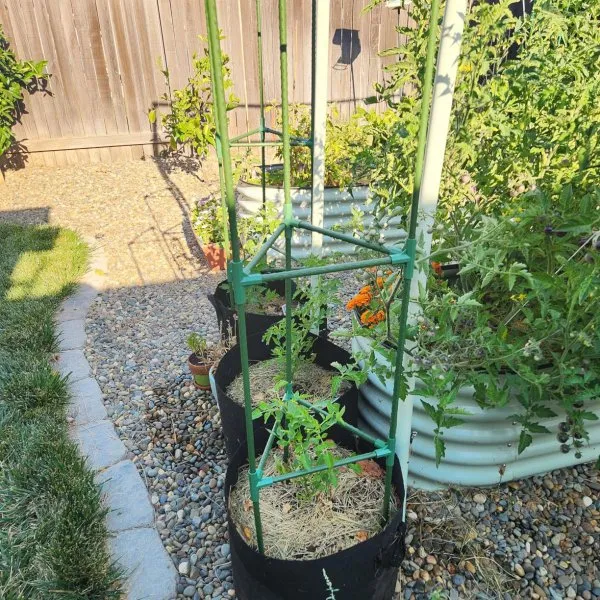
Mark the space you still need to use
Before fixing anything in place, walk the route with a watering can, open the door or gate, pull out a chair, and notice where the afternoon shade falls. A trellis can look neat in a photo and still become awkward if it sits in the middle of daily use.
Keep stems, ties, and growing tips away from places that open, close, or scrape.
You should be able to reach the soil and roots without bending through a wall of leaves.
A tall support can help climbing crops, but it may shade herbs, lettuce, or flowers below.
Leave enough space to tie new stems and cut back growth before it spills into the path.
When the support is already in the way before the plant grows, it will be harder to live with later in the season.
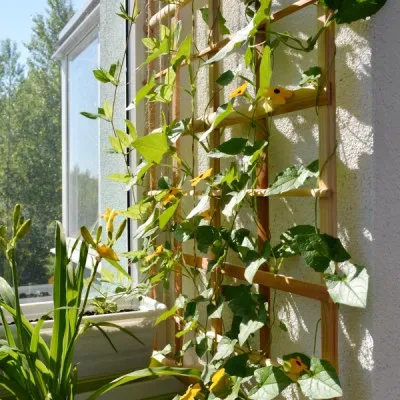
5 places a trellis can work in a small garden
Most small gardens have at least one edge doing very little. That is usually where a trellis belongs. It should borrow space from a boundary, corner, pot, or bed edge instead of taking over the centre.
| Where to place it | Works well for | Check before planting |
|---|---|---|
| Beside a balcony rail or side wall | Peas, beans, sweet peas, light annual climbers, and narrow decorative planting | Wind exposure, building rules, and whether the door still opens freely |
| Against a fence or patio wall | Wall-trained flowers, light screening, and vertical planting where floor space is tight | Fixing points, wall condition, and how much light the planting will remove |
| In a wide pot at a corner | Obelisks, compact frames, and single feature plants near an entrance or seating area | Pot weight, drainage, and whether people brush past the plant |
| Along the back or side of a raised bed | Cucumbers, peas, pole beans, and tomatoes that need regular harvesting | Reach into the bed and shade on lower crops |
| Across one awkward sight line | Light privacy near seating, service areas, or balcony edges | Airflow and the feeling of enclosure once plants fill in |
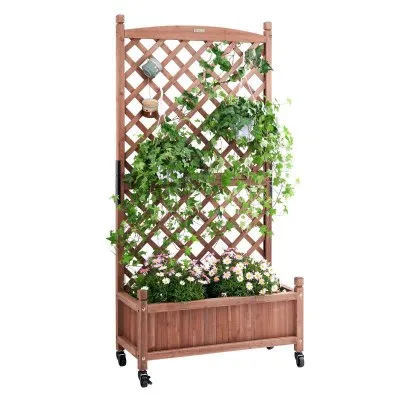
Useful when you cannot fix into a wall, as long as the feet and base stay steady.
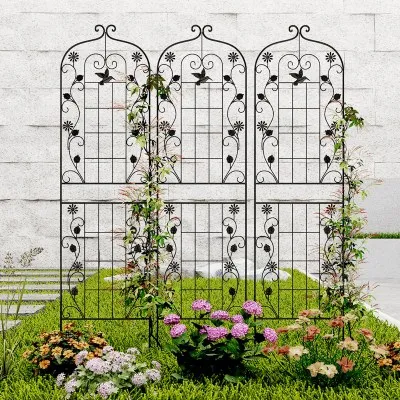
Good for shaping one boundary without closing in the whole garden.
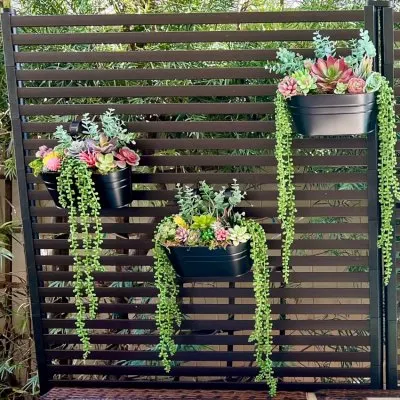
Works when the base is narrow but the planting still needs a vertical line.
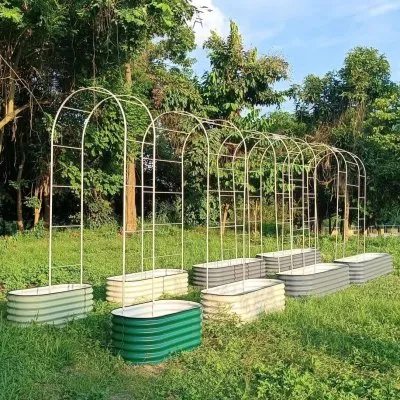
Raised beds: start with crop weight
Vegetable trellising is not only about saving space. It changes how you water, harvest, prune, and keep fruit off damp soil. The heavier the crop, the more the frame and anchoring matter.
| Crop | Support direction | Small-space note |
|---|---|---|
| Peas and sugar snap peas | Netting, slim panels, or light lattice | Place where pods can be picked from one side without stepping into the bed. |
| Pole beans | Taller panel, teepee, or arch over a bed edge | Leave a clear harvest side, because vines can thicken quickly. |
| Cucumbers | Angled panel, A-frame, or strong vertical mesh | Train early and keep the fruit visible so it does not hide inside dense leaves. |
| Indeterminate tomatoes | Strong cage, stake system, or rigid frame | A light decorative trellis is usually not enough once stems and fruit build weight. |
| Small squash or melons | Reinforced frame, often with fruit support | Use only where the frame is anchored and the fruit will not hang into the walkway. |
Not every vegetable needs to climb. Bush varieties, leafy greens, herbs, and root crops may be better below or beside the support.
Choose a height you can still reach
Taller support gives more growing room, but it also catches more wind and makes tying, pruning, and harvesting harder. In a small garden, easy reach often matters more than maximum height.
Low peas, short annual vines, small pots, and places where sight lines should stay open.
A practical range for many raised beds, cucumbers, beans, and patio edges.
Useful for taller crops or light screening, but anchoring and shade need more care.
Better treated as a permanent garden structure, not a quick add-on for a tight corner.
Container trellises need a steady base
A pot-grown trellis is helpful for renters, paved patios, and balconies, but the container has to steady the whole setup. A narrow pot with a tall frame may stand upright in calm weather and still lean once leaves catch wind.
- Use a wider or heavier container as the support gets taller.
- Set the frame deep enough that it does not twist when stems are tied.
- Keep the pot near a wall or corner if the balcony is windy.
- Leave space to water the soil, not just the foliage.
Set the empty support in the planted container and nudge the rim gently. If the pot rocks before the vine has started growing, choose a steadier base.

For privacy, soften one view instead of every side
A small garden usually needs one view softened: a neighbour’s window, a balcony rail, a service corner, or the area behind a seat. Covering every open side can make the space darker, wetter, and less pleasant to use.
Open lattice, slatted panels, and lighter climbers keep air and light moving. Dense planting can be beautiful, but in a compact space it should be used where it solves a real sight-line problem.
Keep the plant smaller than the frame
The support may be small, but the plant might not stay small. Choose climbers that can be tied, thinned, and kept inside the width you actually have.
| Planting direction | Why it works in a compact space | Be careful with |
|---|---|---|
| Peas, beans, sweet peas, and light annual vines | They give quick height without becoming a permanent woody mass. | Letting vines spill into doors, rails, or walking space. |
| Clematis, honeysuckle, star jasmine, and smaller flowering climbers | They can soften a wall or panel while staying manageable with pruning. | Choosing a vigorous variety for a very narrow frame. |
| Climbing roses, grapes, wisteria, trumpet vine, and heavy fruiting crops | They can be impressive, but they belong on stronger, well-anchored structures. | Putting long-term heavy growth on a lightweight decorative trellis. |
Mistakes that make a small trellis harder to live with
Even a narrow frame becomes irritating if people brush past it every day.
One clear vertical line often looks calmer than several frames competing for attention.
Most failures start with poor anchoring, light pots, blocked drainage, or weak fixing points.
Train early. A vine is easier to steer before it has filled the whole frame.
FAQ
What type of trellis works well in a very small garden?
A flat wall or fence panel is usually the easiest way to save floor space. In pots and corners, a narrow obelisk works well. In raised beds, a back-edge panel or A-frame keeps crops upright while the centre stays reachable.
Can I use a trellis on a balcony?
Yes, but place it near a wall or rail and check wind exposure, building rules, pot weight, drainage, and door clearance before planting.
What vegetables grow well on a trellis in a small garden?
Peas, pole beans, cucumbers, and indeterminate tomatoes are common choices. Small squash or melons need a stronger frame and may need extra fruit support.
How tall should a small garden trellis be?
For many patios and raised beds, 5–6 ft is manageable. A 7–8 ft trellis can work for taller crops or light screening, but it needs better anchoring and may cast more shade.
How do I keep a trellis from making the space feel crowded?
Keep it on an edge, use one clear vertical line instead of several small supports, and choose plants that can be tied and thinned before they spread into the path.
Can a trellis add privacy in a small garden?
Yes, when it screens a specific view. Use open lattice or a lighter climber so the garden still gets air and daylight.
Need compact trellis options for patios, balconies, or raised beds?
Brice Gardening makes garden arches, obelisks, trellis panels, vegetable stands, and plant supports for compact outdoor spaces. Share the plant type, target height, material, colour, and packing needs, and we can help narrow the options.


