
Types of Garden Trellises and How to Choose One
Garden trellises are not all the same. A flat panel, a fence-top screen, an obelisk, an arch, and a crop frame can all help plants climb, but each one changes the garden in a different way.
Quick answer: start by naming the shape you are looking at. Flat panels work against walls and fences, obelisks add height from a pot or bed, arches frame a path or entrance, and crop frames keep vegetables easier to reach.

What is a garden trellis?
A garden trellis is a plant support that gives climbing, twining, tied, or trained stems a clear place to grow. The support may be a decorative lattice panel, a wall frame, a tall obelisk, a garden arch, or a simple mesh frame for vegetables.
The useful question is not only “is this a trellis?” It is “where does this support stand, and what kind of plant is it expected to carry?”
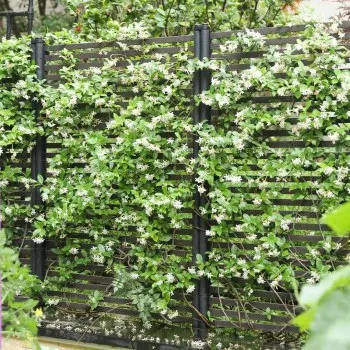
4 garden trellis types at a glance
Use the shape first. Style, colour, and finish are easier to judge after you know whether the support belongs on a wall, in a pot, over a path, or in a vegetable bed.
| Trellis type | Where it usually works | Plants or uses | Watch before choosing |
|---|---|---|---|
| Flat panels and lattice | Walls, fences, boundaries, bed backs, and narrow side areas | Clematis, jasmine, light roses, sweet peas, decorative screening | Mounting strength, panel openness, and whether the wall or fence can take the load |
| Freestanding obelisks and towers | Pots, corners, borders, entry planters, and focal beds | Sweet peas, compact clematis, annual vines, smaller climbing flowers | Base width, pot weight, and whether the plant will crowd the top |
| Arches and arbors | Entrances, path transitions, walkway edges, and larger display areas | Climbing roses, honeysuckle, star jasmine, grape vines, trained seasonal vines | Clearance, anchoring, plant weight, and room for pruning around the frame |
| Crop frames and vegetable trellises | Raised beds, kitchen gardens, edible rows, and growing strips | Peas, beans, cucumbers, tomatoes, small squash, and trained edible vines | Harvest access, airflow, fruit weight, and whether the frame blocks the bed |
Flat panels and lattice: read the pattern and the mounting point
Panel-style trellises are the type most people recognise first. They stay close to a wall, fence, boundary, or bed edge, so the pattern and fixing method matter as much as the plant.
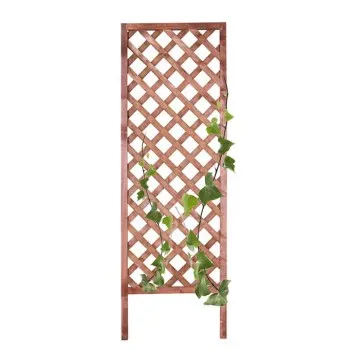
Use this when the plant needs direction against an existing surface and the floor area should stay clear.

Use this for a more open look, light screening, and climbers that benefit from many tying points.

Use this when the aim is partial privacy above a boundary rather than a full climbing wall.

Use this when the goal is to guide one planting line neatly, not to cover a wide boundary.
For panel trellises, look at the gaps. A very open pattern feels lighter and lets more light through; a denser screen gives more cover but may shade plants behind it.
Freestanding trellises: useful when the wall is not part of the plan
Freestanding supports are chosen when the trellis has to stand in a pot, border, or open bed. They work well as a vertical accent, but the base has to be steady before the plant adds weight.
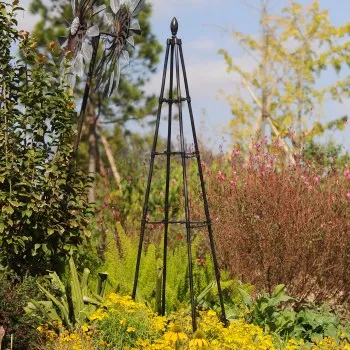
Works in a wide pot, corner, or border when you want one plant to climb upward without needing a fence.

Works when you need to reach around the plant for tying, watering, and light pruning.
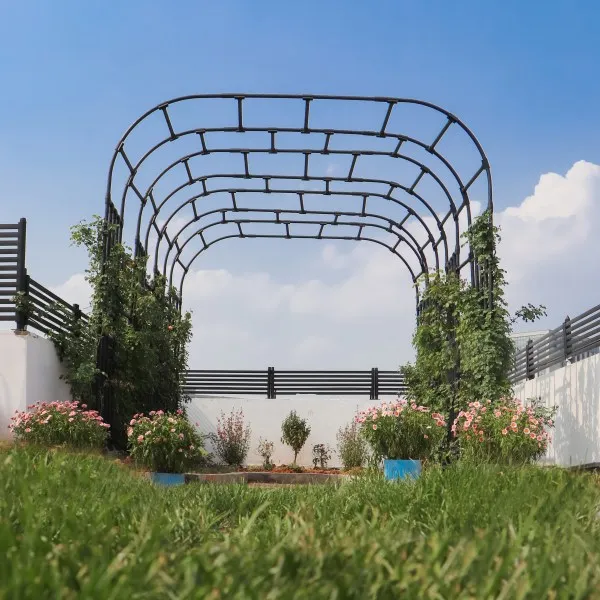
Arches and arbors shape movement, not just plant growth
An arch or arbor is still part of the trellis family, but it asks for more space than a panel. It frames a path, entry, or transition, so clearance and anchoring matter before planting starts.
- Use an arch where people can pass through without brushing stems.
- Choose a stronger frame for climbing roses, grape vines, or long-term woody growth.
- Leave room at both sides for tying and pruning.
If your main question is plant choice for an arch, see Brice Gardening’s climbing plants for garden arches article. This page stays focused on trellis types.
Crop trellises are chosen for reach, harvest, and airflow
In vegetable beds, the trellis is often less decorative and more practical. Beans, peas, cucumbers, and some tomatoes need a support that keeps growth visible and reachable.
| Crop support type | Common use | Check before planting |
|---|---|---|
| Lean-to panel | Cucumbers, peas, and beans along one side of a bed | Can you pick from the open side without stepping into the soil? |
| A-frame | Two-sided access for cucumbers, beans, and seasonal vines | Will the base leave enough growing room below? |
| Mesh or wire frame | Peas, beans, and lighter edible vines | Is the mesh opening easy for stems to grip and for hands to reach through? |
| Cage or rigid tied frame | Tomatoes and heavier edible plants | Will fruit weight pull the frame out of shape? |

Choose by site, plant habit, and weight
A trellis type is easier to choose when you answer three plain questions before looking at finish or decoration.
Wall, fence, pot, border, path, raised bed, or boundary top.
Twining, clinging, tying, sprawling, or fruiting heavily.
Light annual growth, trained flowering growth, woody stems, or edible crops.
Common trellis mix-ups
A lattice panel is a type of trellis, but not every trellis is lattice. Obelisks, arches, mesh frames, and wire supports also belong in the category.
It stands on its own and depends on base stability. It is often better for pots and focal planting than for wide boundary cover.
It is more than a plant support. It changes how people move through the garden.
Open patterns can soften a view while keeping light and air moving.
Harvesting and pruning matter more than the decorative pattern.
Once the type is clear, compare metal, wood, or bamboo by durability, weight, and upkeep.
FAQ
What are the main types of garden trellises?
The main types are flat panels and lattice screens, freestanding obelisks or towers, arches and arbors, and crop frames for vegetables. Some gardens use more than one type.
What is the difference between lattice and trellis?
Lattice is a patterned panel style. A trellis is the broader plant-support category, which can include lattice panels, wall frames, obelisks, arches, mesh frames, and crop supports.
Which trellis type works against a fence?
A flat wall or fence panel is usually the clearest choice. Lattice and topper panels can also work when you want light screening or partial privacy above a boundary.
Which trellis type is best for vegetables?
Vegetables usually need practical supports such as lean-to panels, A-frames, mesh panels, wire frames, cages, or tied systems. Choose by crop weight and harvest access.
Is an obelisk a type of trellis?
Yes. An obelisk is a freestanding trellis form, often used in pots, borders, corners, or focal planting where a wall-mounted panel would not work.
Should I choose trellis type or material first?
Choose the type first. Once you know whether you need a panel, obelisk, arch, or crop frame, material becomes easier to judge. For material details, see Brice Gardening’s metal vs wood vs bamboo garden arches article.
Need help narrowing the trellis type?
Brice Gardening makes garden arches, obelisks, trellis panels, vegetable stands, and plant supports. Share the plant type, setting, target height, material, colour, and packing needs, and we can help compare practical options.


