Oops! Something went wrong while submitting the form.

A self-watering planter helps when a container dries out faster than you can water it, or when the plant grows better with steadier moisture. It still needs the right plant, the right mix, and a quick check from time to time.
How it works: water sits below the planting area and moves upward gradually through the system.
How to start: water from the top after planting so the mix settles and roots begin to establish.
When to use one: choose it for plants that like even moisture, not for plants that need the mix to dry well between waterings.
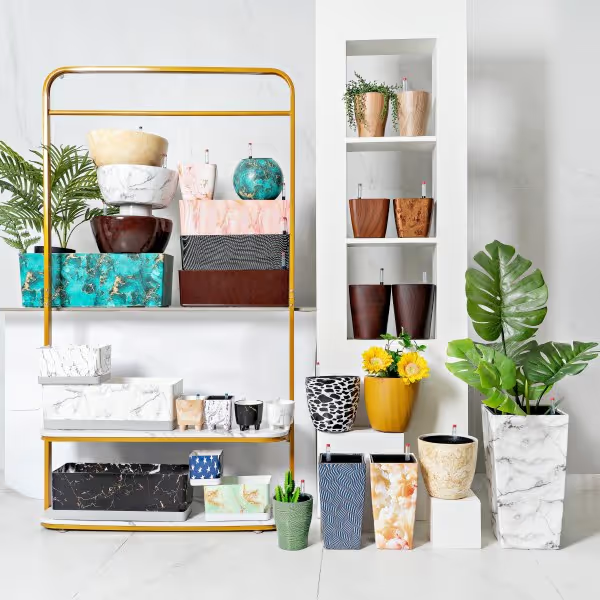
A self-watering planter gives the pot a water reserve below the main root area. The plant should not be sitting in a swamp. A good design keeps water available lower down while leaving enough air in the mix for healthy roots.
That is why these planters often make sense for houseplants, balcony herbs, window boxes, and patio containers that dry out quickly between hand waterings.

For everyday use, it helps to see the inside once. Most self-watering planters use the same basic idea, even when the shape or material changes.
The upper section holds the plant and potting mix. Roots still need air, not only water.
The lower section stores water so the planter has a buffer between hand waterings.
This helps keep the mix from sitting directly in the full water reserve.
A fill opening or water indicator makes refilling easier to understand.
For reservoir depth, separators, overflow, and wickless structure, use Brice Gardening’s deep dive on how self-watering planters work.

The first watering matters. Even with a reservoir, a newly planted container usually needs water from above first. This helps the mix settle around the roots and removes dry pockets.
Use a mix that holds moisture but still leaves air around the roots.
Water from above until the mix is evenly moist and the plant is settled.
Use the fill point or water indicator if the planter has one.
Check moisture during the first weeks. The reservoir becomes more useful once roots have settled into the container.

Two questions come up again and again: how often to refill the reservoir, and what soil to use. Both depend on the plant and the room or outdoor setting, so fixed schedules can be misleading.
Check the indicator or reservoir more often during the first few weeks, then let the plant’s use pattern guide you. Warm rooms, sun, wind, and active growth can shorten the refill gap.
A light, open potting mix is usually safer than dense garden soil. The mix should move moisture upward without closing off too much air around the roots.
The planter works best when the plant’s water preference matches the reservoir. That is the part to check before buying.
| Plant or use | Often a good match? | Why it matters |
|---|---|---|
| Indoor foliage plants | Often yes | Many prefer a steadier moisture pattern, especially in warm rooms. |
| Balcony herbs | Often yes | Small containers can dry quickly in sun and wind. |
| Window boxes and mixed flowers | Often yes | Reservoir volume can reduce sharp dry spells during active growth. |
| Succulents, cacti, and dry-loving plants | Usually not first choice | These plants often need the mix to dry well between waterings. |
| Plants in very low light | Use caution | Low light slows water use, so the mix can stay wet longer than expected. |
They are most useful when the place, plant, and watering rhythm all point in the same direction: the container needs steadier moisture than you can easily provide by hand.
Useful when room heat, missed waterings, or uneven watering make the plant swing too dry.
Helpful where sun and wind dry small containers quickly.
Good when a long planter is awkward to water evenly from the top.
Worth considering when the reservoir is large enough and overflow is handled well.

A self-watering planter can make care easier, but only when the setup is sensible. These are the mistakes that most often cause trouble.
A dry mix may not settle well, and young roots may not reach the moisture zone yet.
Heavy soil can reduce air space and keep the root zone too wet.
Some plants do better in a normal draining pot with a clearer dry period.
Outdoor planters need a way to handle excess rain, and reservoirs should not be left full before freezing weather.
Once the basic use case is right, compare the planter itself. The right choice makes watering easier without creating a new maintenance problem.
Large enough to matter, but not so large that the plant stays too wet.
Easy to reach after the planter is placed and planted.
Helpful when you do not want to lift the pot or guess by surface dryness.
Especially important outdoors, on balconies, and in rainy weather.
The planter should still feel steady when filled with soil, water, and mature growth.
Useful for longer-term indoor, patio, and retail display use.
If you are already comparing size, scene, reservoir depth, and plant type, use the self-watering planters decision framework.

They are worth it when the planter changes daily care in a useful way: the container dries too fast, the plant prefers steadier moisture, or the spot is awkward to water evenly. They are not automatically better for every plant. If the plant wants a dry spell between waterings, or the reservoir is hard to refill, a simple draining pot may be the calmer choice.
For garden centres, online garden shops, and project buyers, the details that matter are often very practical. People need to see where to add water, how to read the water level, and what happens when rain or missed refills change the moisture level.
It stores water in a lower reservoir and lets moisture move upward into the potting mix more gradually than a standard top-watered pot.
Yes. Top-watering after planting helps settle the mix, remove dry pockets, and support the roots while they begin to establish.
Use a light, open potting mix rather than dense garden soil. The mix should carry moisture while still leaving air around the roots.
They can reduce some watering mistakes, but they do not remove all risk. Plant choice, potting mix, reservoir size, light, and season still matter.
There is no single schedule. Refill timing depends on plant size, light, temperature, wind exposure, reservoir size, and how quickly the mix dries in that setting.
Plants that prefer a clear dry period, such as many succulents and cacti, are usually not the first choice for reservoir planters.
Send the plant type, planter size, and where it will sit. Brice Gardening can help check whether a self-watering planter is the right choice.


