
Best Climbing Plants for Garden Arches
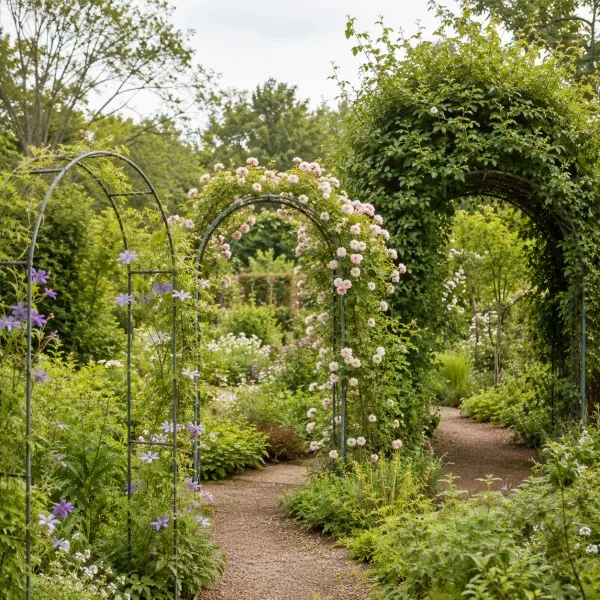
The best climbing plant for a garden arch is the one the arch can carry after several seasons. Light annuals give quick colour, roses and clematis build a lasting flowering frame, and wisteria should be saved for a strong, well-anchored structure.
Quick answer: choose the plant by arch strength first, then by flower, fragrance, shade, or speed of cover.
- Fast seasonal cover: sweet peas, morning glory, black-eyed Susan vine, nasturtium, or runner beans.
- Classic flowering arches: climbing roses, clematis, honeysuckle, star jasmine, or passionflower.
- Heavy long-term displays: wisteria, grape vine, climbing hydrangea, trumpet vine, or bougainvillea on reinforced frames only.
Start with the arch, then choose the climber
A garden arch is a support, a doorway, and a visual frame. Before choosing a plant, decide whether the arch is meant to give quick colour, mark an entrance, support roses, or become a long-term planted feature.
Use lighter climbers or one manageable medium plant. The goal is charm without pushing the frame too hard.
Choose plants that can be tied back neatly, so flowers and stems do not close the passage.
Plan for mature stems, wind exposure, pruning access, and the final weight of the plant.
Match plant weight to arch strength
Plant load is the cleanest first filter. It prevents the common mistake of choosing a dramatic climber before checking whether the frame can carry it after several seasons.
| Plant class | Good examples | Best arch situation | Main risk |
|---|---|---|---|
| Light | Sweet pea, morning glory, black-eyed Susan vine, nasturtium, runner beans | Slim arches, compact spaces, first-season displays | Seasonal effect needs refreshing |
| Medium | Climbing roses, clematis, honeysuckle, star jasmine, passionflower | Standard metal arches, rose arches, entrance arches | Needs tying-in and seasonal pruning |
| Heavy | Wisteria, grape vine, climbing hydrangea, trumpet vine, bougainvillea | Reinforced arches, braced arbors, wide spans, long-term features | Can overwhelm weak frames and narrow walkways |

Best when the arch is slim, temporary, or used for fast seasonal colour.

The safest middle ground for classic flowering arches, entrances, and garden paths.

Only make sense when the arch, base, and maintenance access were planned for mature growth.
Simple rule: when arch strength is uncertain, choose one load class lighter than the most dramatic option.
Choose by the garden result you want
Once the load class is clear, choose by the result people want from the arch: quick colour, a flowering entrance, scent near a path, or a long-term planted feature.
Sweet peas, morning glory, black-eyed Susan vine, nasturtium, and runner beans give a fast first-season result without long-term woody weight.
Climbing roses, clematis, and honeysuckle create the familiar garden-arch look with moderate care.
Sweet peas, honeysuckle, climbing roses, and star jasmine work best where people pass close enough to notice the scent.
Wisteria, grape vine, and climbing hydrangea can be beautiful, but only on supports planned for mature growth.
For heavy climbers, compare the arch material and build before choosing the plant. The metal vs wood vs bamboo garden arches guide is the natural next step.
Train early so the arch still works as an arch
A good climber can still look messy if it is left to bunch at the top. Tie young stems while they are flexible, spread them across the sides and curve, and keep the centre open enough for people to pass through comfortably.
Use soft ties, guide stems outward, check ties as stems thicken, and prune for airflow and access.
Wire ties, blocked walkways, and two vigorous climbers competing on one modest arch.
Look at ties, base stability, plant weight, and whether the arch still reads as a clear garden frame.

For shops and sourcing teams
When an arch is sold for climbing plants, the plant story should match the frame. A light seasonal arch, a rose arch, and a wisteria-ready arbor are different products, even if they look similar in a catalogue.
Group arches by what customers are likely to grow: annual vines, roses and clematis, vegetables, or heavy woody climbers.
Show the material, tube diameter, joint design, base type, and the plant class the arch is meant to handle.
A lawn border, deck, masonry path, windy corner, or public walkway may need different feet, anchors, or bracing.
Brice Gardening supplies garden arches, obelisks, rose supports, trellis panels, and related metal garden supports. For plant-matched sourcing, compare the garden arches and trellises collection or the focused garden arches and arbors page.
FAQ
What is the best climbing plant for a garden arch?
For most garden arches, the safest starting point is a light or medium climber such as sweet pea, clematis, honeysuckle, or a climbing rose. The best choice depends on arch strength, sun, space, fragrance preference, and pruning tolerance.
What is the fastest climber for an arch?
Annual climbers such as sweet peas, morning glory, black-eyed Susan vine, nasturtium, and runner beans are usually the quickest way to cover an arch for one season without adding heavy long-term load.
Can wisteria grow on a small garden arch?
Wisteria can grow over arches, but it should not be treated as a casual plant for a light decorative frame. It becomes vigorous and woody, so it needs a strong, well-anchored arch with a real maintenance plan.
Which climbing plants are best for fragrance near a path?
Sweet peas, honeysuckle, climbing roses, and star jasmine are strong choices when the arch sits near an entrance, seating area, or walkway where fragrance can actually be noticed.
Are climbing roses too heavy for garden arches?
Climbing roses are usually a medium-load choice rather than the heaviest option, but they still need a sturdy arch, regular tying-in, and enough clearance so thorny stems do not crowd the walkway.
What type of arch is best for heavy climbing plants?
Heavy climbers such as wisteria, grape vine, and climbing hydrangea need stronger metal or well-built timber arches with reliable anchoring, reinforced joints, and enough room for pruning access.
Need arch options for roses, clematis, or heavier climbers?
Tell Brice Gardening the plant type, target span, installation surface, colour, and packaging needs. We can help match the arch structure to the way customers will actually plant it.


