
How to Choose a Plant Pot for Healthy Growth
A good pot does more than hold soil. It helps water leave at the right time, gives the roots enough room, and still feels practical once it is on a shelf, balcony, patio, or doorway.
Quick answer: start with drainage, then choose a size close to the root ball. After that, pick the pot type, material, and shape that match the plant and the place where the pot will sit.

Choose the pot type before the finish
A basil pot on a sill, a nursery liner inside a decorative cover, and a large patio planter do not need the same container. Look at how the pot will be used before choosing colour or finish.
Nursery or grow pot
Useful when drainage and root access matter more than display. It can sit inside a decorative outer pot.
Decorative cachepot
Works best as an outer cover, with the plant kept in a smaller pot that drains properly.
Pot with saucer
Good for watering in place while protecting shelves, floors, or furniture from extra water.
Self-watering planter
Helpful when hand watering is irregular or when a larger planter is hard to wet evenly from the top.
Window box or railing planter
Fits sills, balcony rails, and ledges where a round floor pot would use too much space.
Large patio planter
Needs enough soil volume, a stable base, and drainage that can handle rain as well as watering.
Drainage comes before the finish
A pot is hard to care for when water has nowhere to go. For most plants, a drainage hole is not a small detail; it keeps the root zone from staying wet too long.
- Use a pot with drainage holes when planting directly into the container.
- Use a saucer indoors when the surface underneath needs protection.
- Use a cachepot as an outer cover, not as a sealed root zone.
- Do not count on a layer of stones to fix a pot with no drainage.
- For outdoor pots, plan for rain as well as hand watering.
If a decorative pot has no hole, keep the plant in a smaller draining pot inside it. Water the inner pot, let it drain, then return it to the outer cover.

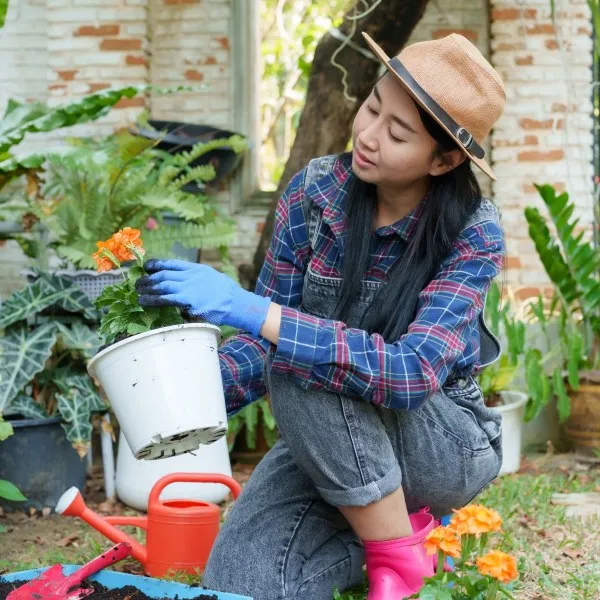
Move up when the roots need room
A larger pot gives roots more room, but too much empty soil can stay wet after watering. For many plants, a modest size increase is safer than jumping into a much larger container.
- For many houseplants, choose a pot only slightly wider than the current root ball.
- For dry-loving plants, be especially careful with oversized containers.
- For outdoor mixed planters, size also affects how fast the planter dries out.
Need actual measurements? Use Brice Gardening’s plant pot size guide when you need to compare diameter, height, litres, or nursery pot sizes.
Match the pot to the plant and watering pattern
A fern, cactus, basil plant, and balcony flower box do not ask for the same container. The right pot should make everyday care easier, not turn watering into a guessing game.
| Plant or use case | Pot direction | Why it helps |
|---|---|---|
| Succulent or cactus | Smaller pot with clear drainage | Less spare soil helps the pot dry in a more predictable way. |
| Fern or moisture-loving foliage plant | Container that holds moisture evenly but still drains | Steady moisture helps, but standing water still causes problems. |
| Fast-growing foliage plant | One size up with enough base stability | Roots get more room without making the pot awkward to water. |
| Kitchen herbs | Low or rectangular pot with easy access | The pot should fit the sill or counter and make cutting simple. |
| Balcony flowers | Lightweight planter with a steady footprint | Weight, wind, and walking space matter as much as colour. |
| Outdoor mixed planting | Wider planter with strong drainage | Mixed roots need soil volume, but the planter must still drain after rain. |
Choose material by drying speed, weight, and heat
Material changes daily care. One pot may dry quickly, another may become heavy, and another may heat up more than the plant likes.

Light and easy to move, especially for larger planters.
Dries faster, which helps plants that dislike wet soil.
Looks strong on display, but check weight and drainage first.
Good outdoors when you want size without too much weight.
Better as an accent unless heat and drainage are easy to control.

Check shape and placement together
Two pots can hold a similar amount of soil and still feel very different in use. Tall narrow pots can become top-heavy. Low wide planters often work better for herbs, mixed flowers, and shallow-rooted planting.
- Use broader bases for top-heavy foliage plants.
- Use rectangular formats for sills, rails, and narrow ledges.
- Avoid heavy floor pots where they block doors, steps, or cleaning access.
Before buying, imagine the pot filled with soil and water. Can you still lift it, turn the plant, clean around it, and use the space comfortably?
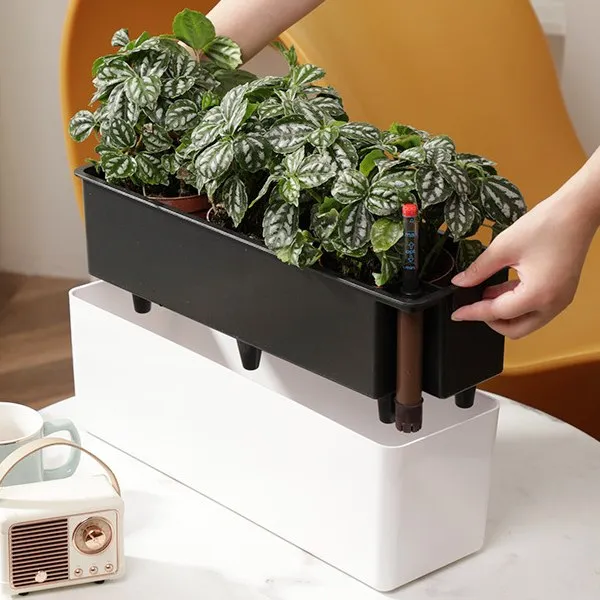
Use self-watering when moisture control is the main issue
A self-watering planter can help when hand watering is irregular, when the container is large, or when the plant prefers steadier moisture. It is not the easiest choice for every plant.
Succulents, cacti, and other dry-loving plants often do better in a simpler pot with clear drainage.
For reservoir details, see how self-watering planters work. For product options, browse Brice Gardening’s self-watering pots and planters.
Mistakes that usually show up later
Most pot problems start with a few simple mismatches. Check these before colour, texture, or price takes over.
Going too large
Extra soil can stay wet long after the roots have used what they need.
Planting into a sealed pot
A pot without drainage is safer as an outer cover than as the main growing pot.
Ignoring sun and heat
Some materials heat up quickly or dry too slowly for the plant inside.
Forgetting filled weight
A pot that is easy to move empty can be awkward once soil and water are added.
One last check before you buy
Will extra water leave the root zone?
Is the pot close to the current root size?
Does it match how often you water?
Will it still work once filled and placed?
FAQ
What are the main types of plant pots?
Common types include nursery pots, decorative cachepots, pots with saucers, self-watering planters, window boxes, hanging planters, and larger outdoor planters. The right type depends on whether the container is mainly for growing, display, moisture control, or outdoor planting.
How much bigger should a new plant pot be?
For many houseplants, move up one practical size rather than several sizes at once. A pot that is only modestly larger than the current root ball is usually easier to water than an oversized container full of unused wet soil.
Is drainage more important than pot material?
For most plants, yes. Material affects drying speed, weight, and heat, but poor drainage can damage roots faster than choosing the wrong wall material.
Can I use a decorative pot without drainage holes?
Yes, but it is usually safer to use it as a cachepot. Keep the plant in a smaller nursery pot with drainage, water it separately, and return it after extra water has drained away.
Should I put rocks in the bottom of a plant pot?
Not as a drainage fix. A layer of stones does not replace drainage holes. A pot with proper holes and a suitable potting mix is usually the better choice.
When is a self-watering planter a better choice?
It is often better when moisture consistency matters, hand watering is irregular, or the planter is large enough that top watering becomes uneven. It is less helpful for plants that prefer to dry down quickly.
Choosing pots for a project?
Send the plant type, size range, material, and where the pots will be used. Brice Gardening can help you narrow the options.
Chat on WhatsApp


